Dorothy Auction 2026 秋季拍賣會重要拍品
An Important Highlight of the Dorothy Auction 2026 Autumn Sale
江山入卷,一覽千里
A Vast Landscape Unfolding Across the Scroll
中國山水畫的最高境界,從來不只是對自然景物的摹寫,而是將山川、天地與文人精神共同納入筆墨之中。畫家藉由峰巒、江河、林木與煙雲構築可遊、可居、可臥遊的精神世界,使自然景觀超越具象描繪,成為中國傳統文人寄託思想與審美理想的重要載體。
At its highest level, Chinese landscape painting is never merely a representation of the natural world. Mountains, rivers, forests and mist are transformed through brush and ink into an intellectual and spiritual realm—an imagined landscape through which the scholar may wander, dwell and contemplate. Nature thus transcends physical description to become a vehicle for the aesthetic and philosophical ideals of the Chinese literati tradition.
多祿溙國際拍賣 Dorothy Auction 2026 秋季拍賣會中國書畫板塊,正式呈現一件氣象恢宏的水墨長卷——傳惲壽平《萬里江山圖》。本作經本行實物審視後,憑藉其長卷形制、完整的山水敘事、繁密而富有秩序的筆墨,以及極具視覺張力的通景構圖,現已正式進入本季拍賣圖錄行列,並將作為中國古代書畫板塊的重要作品進行市場呈現。
For its 2026 Autumn Sale, Dorothy Auction is pleased to present an imposing Chinese landscape handscroll, Ten Thousand Li of Rivers and Mountains, attributed to Yun Shouping (1633–1690). Following an in-person examination by the auction house, the work has been formally selected for inclusion in the 2026 Autumn Sale catalogue, distinguished by its ambitious handscroll format, coherent landscape narrative, intricate yet disciplined brushwork, and commanding panoramic composition. It will be presented as an important work within the Chinese Classical Paintings section.
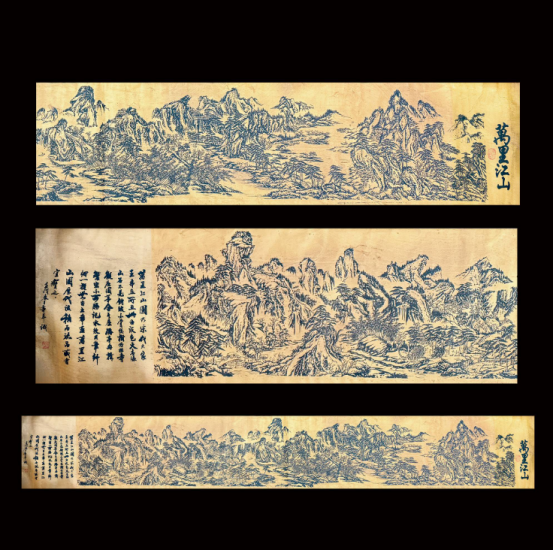
全卷以連綿山川為主體,峰巒、江河、林木、樓閣、舟楫與人物隨卷舒展,形成由近及遠、層層推進的宏闊空間。觀者隨畫卷徐徐展開,如沿江而行、穿行群山之間,在有限尺幅中感受千里江山不斷延伸的時間與空間。
Across the scroll, successive mountain ranges dominate the composition, interwoven with rivers, forests, architectural structures, boats and diminutive figures. These elements unfold gradually to create an expansive spatial progression from foreground to distance. As the handscroll is revealed section by section, the viewer is invited to journey along waterways and through mountain valleys, experiencing an imagined landscape extending far beyond the physical boundaries of the paper.
惲壽平與清初文人畫的典雅氣象
Yun Shouping and the Refined Spirit of Early Qing Literati Painting
惲壽平(1633–1690),初名格,字壽平,號南田,江蘇武進人,為清初畫壇最具代表性的文人畫家之一,與王時敏、王鑑、王翬、王原祁、吳歷並稱「清初六家」,在清代繪畫史上佔據重要地位。
Yun Shouping (1633–1690), also known as Yun Nantian, was a native of Wujin, Jiangsu, and one of the most distinguished scholar-painters of the early Qing dynasty. Together with Wang Shimin, Wang Jian, Wang Hui, Wang Yuanqi and Wu Li, he is traditionally recognised as one of the Six Masters of the Early Qing, occupying an important position in the history of Qing painting.
惲壽平尤以花卉藝術享譽後世,其「沒骨」花卉一路對清代以降花鳥畫發展產生深遠影響。然而其藝術根基並不止於花卉,早年即精研山水,取法宋元諸家,在古典山水傳統與清初文人審美之間,形成清逸、秀潤而富有書卷氣的藝術語言。
Yun Shouping is celebrated above all for his refined flower paintings, particularly his mastery of the mogu, or “boneless”, technique, which profoundly influenced later generations of Chinese flower-and-bird painters. His artistic foundations, however, extended well beyond floral subjects. He studied landscape painting from an early stage, drawing inspiration from the great Song and Yuan traditions and developing a visual language characterised by elegance, refinement and scholarly restraint.
相較於廣為流傳的花卉冊頁,與惲壽平相關的山水作品在市場中所見相對有限,而具有完整通景意識、尺幅宏闊的山水長卷,更具有鮮明的藝術與收藏特徵。此類作品不僅呈現畫家的筆墨能力,更考驗其對長距離構圖、空間節奏及整體氣脈的控制。
Compared with Yun Shouping’s widely recognised flower albums and related works, landscapes associated with the artist appear less frequently on the market. Large panoramic handscrolls with sustained compositional structure are particularly distinctive from both artistic and collecting perspectives. Such works demand not only accomplished brushwork but also sophisticated control of extended composition, spatial rhythm and pictorial continuity.
千山萬壑,筆墨成境
Mountains and Valleys Brought to Life Through Brush and Ink
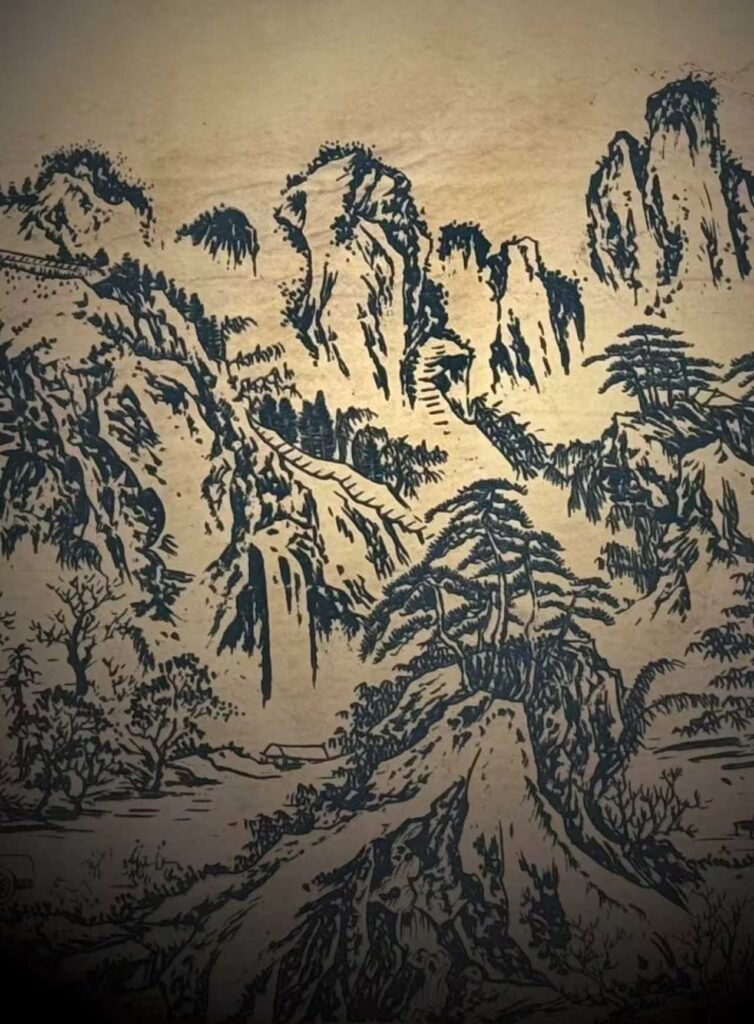
本卷最具感染力之處,在於其完整而連續的山水敘事。畫面並非以單一主峰統攝全局,而是藉由群峰連綿、山勢開合、江河轉折與林木聚散,不斷建立新的視覺節奏。高峰突起,丘壑縱橫,溪澗自山間穿行而下,與遠處水域相互呼應,使不同段落既可獨立成景,又能在長卷之中彼此銜接。
Among the most compelling qualities of the present scroll is its sustained and coherent landscape narrative. Rather than organising the entire composition around a single dominant peak, the painting establishes an evolving visual rhythm through successive mountain ranges, alternating passages of openness and enclosure, winding waterways, and shifting concentrations of trees. Towering peaks rise above deep valleys, while streams descend through the mountains and connect visually with distant waters, allowing individual passages to stand independently while remaining integral to the composition as a whole.
山石主要以線性筆墨建立骨架,峰巒輪廓清晰而富變化。勾勒、皴擦與墨色層次相互配合,密處層層疊加,疏處則藉留白形成江面、雲氣與空間,使整體在繁密之中仍保有清晰的呼吸與節奏。畫面既有山河雄渾之勢,又不失文人畫特有的清雅氣韻。
The mountains are constructed primarily through linear brushwork, their contours clearly articulated yet varied in rhythm and form. Outlining, textural strokes and modulated ink tones work together throughout the composition: densely worked passages create geological depth, while areas of reserved paper evoke water, mist and atmospheric distance. Despite its considerable pictorial complexity, the scroll retains clarity and visual breathing space, balancing monumental landscape structure with the cultivated elegance associated with literati painting.
尤其值得關注的是作品對細節的經營。山間屋舍、樓閣、橋樑、樹木、舟楫與人物並非單純作為裝飾,而是被安排於山川行旅的不同節點。宏大的自然尺度與細微的人文景觀彼此對照,使「萬里江山」不只是自然世界,同時成為一幅可以行旅、停駐與觀照的人文山河圖景。
Particular attention should also be given to the treatment of detail. Houses, pavilions, bridges, trees, boats and figures are not employed merely as decorative motifs; rather, they punctuate different stages of an imagined journey through the landscape. The contrast between monumental nature and intimate traces of human habitation transforms the “ten thousand li” landscape into a cultivated world—one conceived to be travelled through, inhabited and contemplated.
由宋元丘壑至清初筆意
From the Monumentality of Song Landscapes to Early Qing Refinement
中國山水長卷自宋元以來,即承載著極為重要的藝術傳統。與立軸強調整體觀看不同,手卷需要觀者以時間性的方式逐段展閱,畫面並非一次呈現,而是在「展卷、觀看、移動、再展卷」的過程中逐漸形成完整世界。這種獨特的觀看方式,使長卷成為中國繪畫最具東方哲學意味的藝術形式之一。
Since the Song and Yuan dynasties, the landscape handscroll has occupied a particularly important place within the Chinese painting tradition. Unlike the hanging scroll, which may be apprehended largely as a single composition, the handscroll is experienced sequentially. The image emerges through a process of opening, viewing, moving and revealing, gradually constructing a complete pictorial world. This distinctive mode of viewing makes the handscroll one of the most conceptually sophisticated formats in Chinese art.
《萬里江山圖》延續了這種古典觀看方式。作品構圖可見對傳統山水宏闊格局的追慕,高遠、深遠、平遠相互交錯,山體之間藉由水域、谷地與空間留白完成轉換;而筆墨處理則更趨清雅與秀逸,在雄渾丘壑與文人筆意之間建立平衡。
Ten Thousand Li of Rivers and Mountains continues this classical mode of visual experience. Its composition evokes the expansive spatial traditions of Chinese landscape painting through shifting perspectives of height, depth and distance. Mountains are connected through waterways, valleys and areas of open space, while the brushwork introduces a more restrained and refined sensibility, balancing monumental terrain with the cultivated spirit of the literati tradition.
作品沒有依賴濃麗色彩建立華麗效果,而是將視覺重心集中於線條、墨色、山勢與空間本身。正是這種克制,使全卷形成古雅而沉靜的氣質,也讓觀者更直接地進入中國水墨藝術最核心的筆墨世界。
Rather than relying upon brilliant colour for decorative effect, the painting concentrates its visual power in line, ink, topography and spatial construction. This restraint lends the scroll an atmosphere of classical elegance and tranquillity, directing attention toward the essential language of Chinese ink painting itself.
長卷形制與收藏意義
The Handscroll and Its Significance in Chinese Collecting
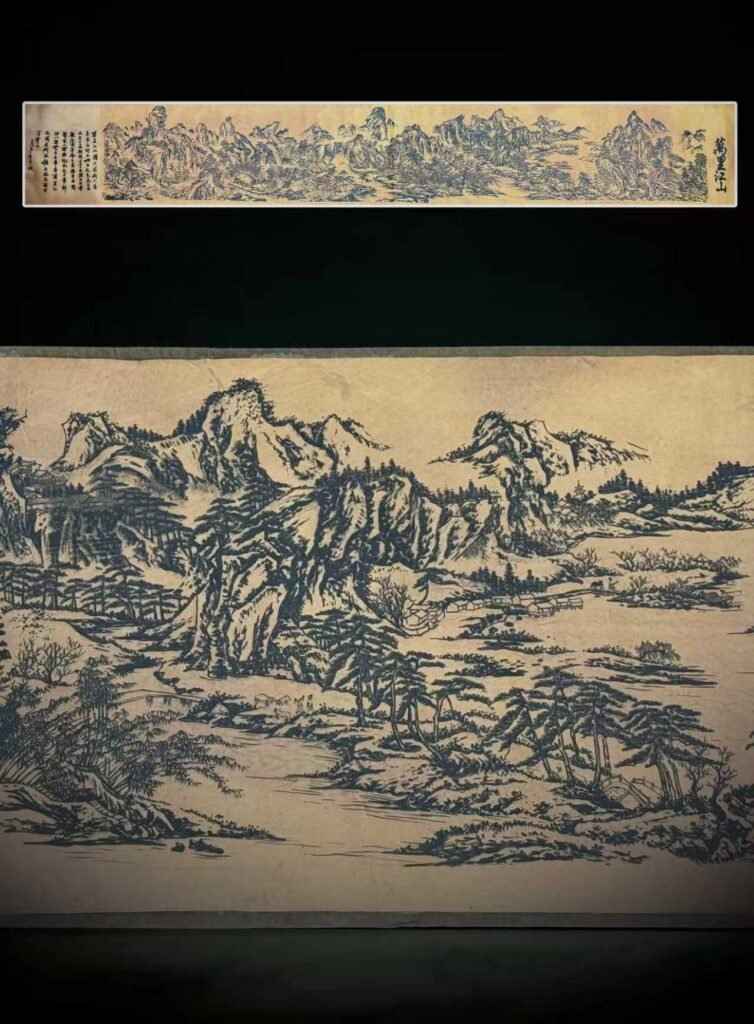
中國古代書畫收藏中,手卷具有極為特殊的文化屬性。它不同於懸掛於空間中的立軸,而是一種更具私人性與文人性的觀看形式。收藏者可以於案頭徐徐展閱,在時間推移之中進入畫面。中國傳統「臥遊山水」的文人理念,亦在這一藝術形式中得到極具代表性的體現。
Within the history of Chinese collecting, the handscroll possesses a particularly intimate cultural character. Unlike a hanging scroll displayed vertically within an interior, a handscroll was traditionally viewed at a scholar’s table and revealed gradually between the hands. This allowed the collector to enter the pictorial world over time, giving physical expression to the classical literati concept of “travelling through mountains and rivers while reclining.”
大型山水長卷對創作者的要求尤其嚴格。從起卷、承接、轉折至收卷,需要在相當長的畫面中維持筆墨、空間、節奏與氣韻的一致性;任何局部都必須服務於整體,而整體又不能因篇幅延伸而失去結構。因此,一件具有完整敘事與連續山勢的大型長卷,其藝術體量與視覺表現往往具有不同於一般尺幅作品的收藏特質。
Large landscape handscrolls present exceptional compositional demands. From the opening passage through successive transitions to the final section, the artist must sustain consistency of brushwork, spatial organisation, rhythm and pictorial vitality across an extended surface. Every individual passage must contribute to the whole, while the overall structure must remain coherent despite its length. A panoramic scroll with a sustained narrative and continuous landscape therefore possesses an artistic presence fundamentally different from that of a conventional single-view composition.
本件《萬里江山圖》以連續山川建立完整敘事,具有鮮明的長卷觀看特徵。對收藏而言,其意義不僅來自畫面本身,也來自這種高度代表中國傳統文人生活、鑑賞方式與山水精神的經典藝術形制。
The present Ten Thousand Li of Rivers and Mountains constructs its pictorial narrative through an uninterrupted progression of mountains and waterways, embodying the distinctive viewing experience of the Chinese handscroll. Its collecting significance therefore lies not only in the painted image itself, but also in a format deeply connected with the traditions of literati culture, connoisseurship and the Chinese philosophical conception of landscape.
一卷展開,千山入目;尺素之間,自有萬里江山。
As the scroll unfolds, mountains rise beyond mountains; within the measured length of paper lies a world extending ten thousand li.
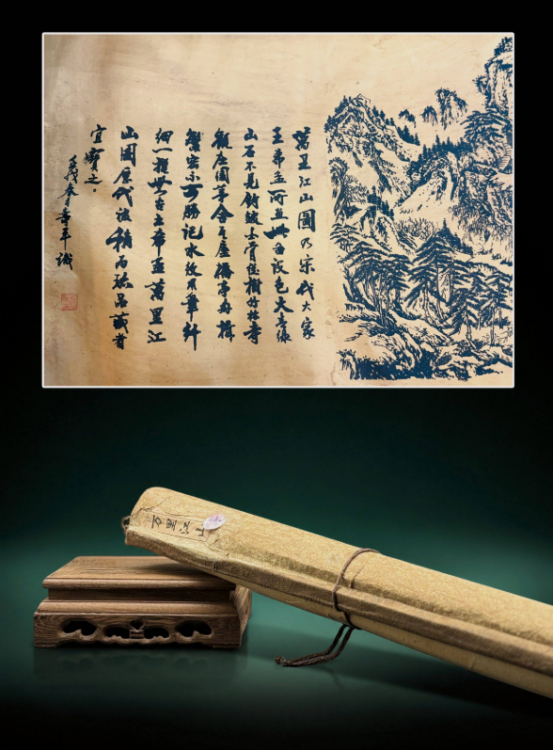
卷後題跋云:
「萬里江山圖,乃宋代大家王希孟河畫……歷代被稱為珍品藏者,宜寶之。壬戌春月壽平識。」
題跋內容既流露對北宋青綠山水經典的讚賞,也反映清初文人對宋代繪畫傳統的理解與承繼。其藝術價值除畫面本身外,亦為研究清初文人山水創作觀念提供了值得關注的實物參考。
本卷採原裝舊裱手卷形式保存,紙質包漿自然溫潤,筆墨層次清晰,題款、鈐印俱存,整體保存狀況良好,兼具歷史風貌與觀賞價值。若經進一步學術研究及系統考證,其在清初文人山水發展脈絡中的定位,值得收藏界與學術界持續關注。
近年中國古代書畫市場持續受到亞洲藏家重視,具有完整形制、保存良好且兼具研究潛力的山水長卷,始終是高端書畫收藏的重要門類之一。
2026年秋季拍賣會現正積極徵集精品藏品,誠邀各界藏家攜珍品共赴國際藝術舞台,讓承載東方文明的瑰寶,在新的時代延續其收藏價值。多祿溙國際拍賣行(Dorothy Auction)長期專注於中國古董藝術品的徵集與推廣,依託專業鑑定團隊、國際化拍賣平台以及全球藏家資源,為優質藏品提供更精準的市場展示機會。
聯繫方式:
WhatsApp:852 84832606
WeChat:Swish41dallas
Line:lqw-njm
Email:qiweiliu623@gmail.com

發佈留言